
23 Oct 2026
Spiti Winter 4x4: The Complete Guide (Route, Vehicles, Safety & Snow Magic)
Spiti in Winter, the 4x4 Way
When the snow closes the passes and the tourists leave, Spiti Valley turns into one of the quietest, most dramatic places in the Himalayas. Rivers freeze into pale ribbons, whitewashed monasteries sit against white slopes, and the only sound on the road is your tyres on packed snow.
Reaching it takes the right vehicle, the right route and the right attitude. This guide covers everything you need to plan a winter 4x4 trip to Spiti: the road, the vehicle, the villages worth the effort, what to pack and how to stay safe.
Why Do Spiti in Winter?
Spiti in summer is beautiful. Spiti in winter is rare. Here is what pulls travellers back every year:
- Snow-covered monasteries like Key and Dhankar, with almost no one around
- Frozen waterfalls and rivers along the Kinnaur and Spiti roads
- Snow leopard country, with winter being the best season for sightings around the high villages
- Crystal-clear night skies for stargazing and astrophotography
- Warm homestay evenings with butter tea, hot momos and a bukhari (stove) in the room
- Real quiet, far from the summer crowds
Is Spiti Open in Winter?
Yes, but only from one side. The Shimla – Kinnaur – Kaza road is the winter lifeline. It does not depend on a high seasonal pass, so it stays workable through most of the season, provided the road is passable on the day you drive it.
The Manali – Kunzum Pass – Kaza road is snowbound through winter, and so is Chandratal Lake. The famous summer loop (in from Shimla, out to Manali) does not exist in winter. A winter trip goes in through Kinnaur and comes back out the same way.
Best Time for a Winter 4x4 Trip
November: The transition month. The Shimla route is usually open, but conditions swing, and the Manali side can close at any time once snow starts.
December: Cold, crisp and increasingly snowy. Good snow chances late in the month, along with a higher chance of temporary road closures.
January to February: Deep winter. This is peak snow, peak silence and the best window for snow leopard tracking. Expect the coldest temperatures of the year and the toughest driving conditions. This is when a 4x4 earns its keep.
March: Snow begins to ease on the lower stretches, days get a little longer, and the high villages are still wrapped in white.
Snow is common but never guaranteed on any single trip, and nobody can promise road conditions months in advance. Keep your dates flexible if you can.
Do You Really Need a 4x4?
Short answer: it depends on the month and the conditions.
- Regular SUV with snow chains: In normal conditions and with an experienced winter driver, a sturdy SUV can handle the maintained main road.
- 4x4: Gives you far better traction on fresh snow, icy climbs and slush. It matters most in January and February, and for the side roads up to high villages like Langza, Hikkim, Komic and Kibber.
- AWD: Useful when the road keeps switching between dry tarmac, patchy snow and ice.
- Sedans: Some have reached Kaza in low-snow spells, but one storm can change the same road completely. We do not recommend it.
A 4x4 is a winter tool, not a guarantee. It cannot cross a landslide, drive through a road buried under snow or override an official closure. Be wary of anyone who says their vehicle can always reach Kaza.
The Winter Route: Shimla to Kaza
Shimla → Narkanda → Rampur → Sangla / Kalpa → Nako → Tabo → Kaza
The road climbs from Shimla through Rampur into the Kinnaur valley, then passes Nako and Tabo before reaching Kaza. It is a long drive, usually split over two days. Common overnight stops are Sangla, Kalpa or Reckong Peo, and Nako.
Worth a detour on the way: Chitkul near the Tibetan border, Kinnaur Kailash views from Kalpa, and the Khab confluence, where the Spiti and Sutlej rivers meet.
Top Places to Visit in Spiti in Winter
- Kaza
Your base for the valley. Homestays, cafés and a few shops stay open through the cold, and most day trips start here.
- Key Monastery (Kee Gompa)
The largest monastery in Spiti, and at its most striking against fresh snow. Winter visits are quiet and deeply atmospheric.
- Kibber and Chicham
Kibber is one of the highest inhabited villages in the region and a base for winter snow leopard tracking with local trackers. Chicham is home to one of Asia's highest suspension bridges.
- Langza, Hikkim and Komic
The high-village circuit: Langza's giant Buddha statue, Hikkim's famous post office and Komic's sweeping views. These roads are the most weather dependent of the trip, and this is exactly where a 4x4 matters.
- Dhankar and Tabo
Dhankar Monastery clings to a cliff edge above the confluence. Tabo Monastery is over a thousand years old and known for its ancient murals.
- Nako
A beautiful stop on the way in, with a village lake that often freezes over in winter.
Note: Chandratal and Kunzum Pass stay closed in winter, and high villages can be cut off after fresh snowfall. Treat every sightseeing list as flexible.
Choosing Your Vehicle
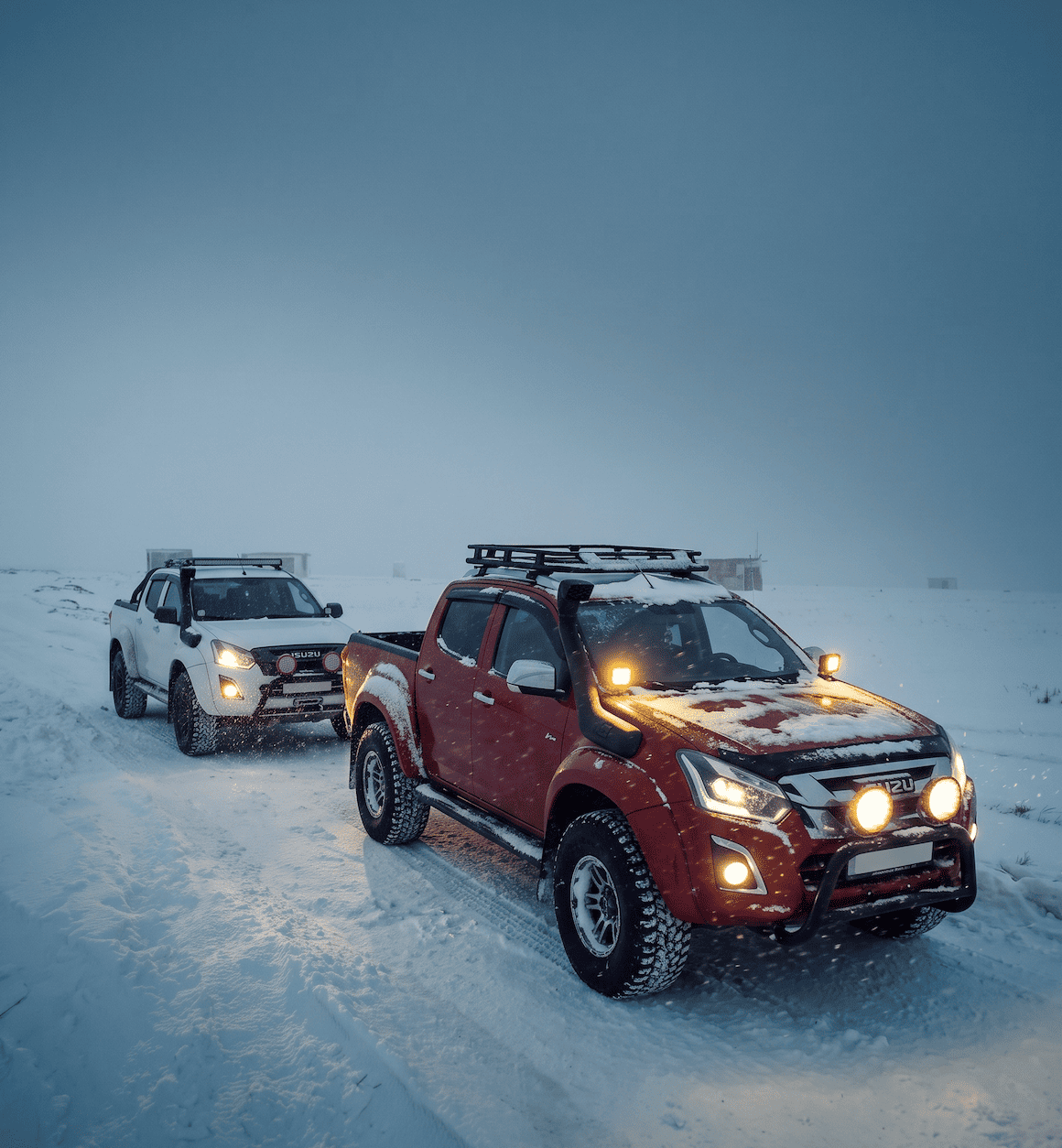
The vehicles you will commonly see on winter Spiti roads include the Mahindra Thar, Scorpio and Maruti Jimny, along with other high-clearance 4x4 SUVs. Whatever you choose, look for:
- High ground clearance for ruts, slush and snow ridges
- 4x4 or AWD with a working low range, if available
- Proper winter or all-terrain tyres in good condition
- Snow chains that fit your tyres, and that you have practised fitting
- A full service before you leave, including brakes, battery, coolant and wipers
Self-Drive or Guided?
Self-driving in winter Spiti is only for people with real experience on snow and ice. Black ice at dawn and dusk, shaded stretches that never thaw, rockfall zones and long road closures can catch out even confident drivers.
If this is your first winter trip, go with a local driver or guided 4x4 expedition. They read the road daily, know where chains go on and where the ice hides, and know when to turn back.
Driving Tips for Snow and Ice
- Start early and aim to be off the road by mid-afternoon, since winter daylight is short
- Keep speed low and gaps large; brake gently and early
- Use a low gear on descents and let the engine do the braking
- Fit chains before you need them, not after you are stuck
- Avoid stopping on slopes or in avalanche and rockfall zones
- Do not drive on frozen stretches after dark
- Check road status in the morning and again during the day
- Be ready to wait or turn back; a closed road is a closed road
What to Pack for a Winter 4x4 Trip
For you:
- Thermal base layers, fleece mid-layers and a quality down jacket
- Insulated, waterproof gloves, a warm cap and a balaclava or neck gaiter
- Waterproof snow boots with good grip, plus woollen socks
- Sunglasses, sunscreen and lip balm (snow glare is intense)
- Personal medication, and altitude medication if your doctor recommends it
- Power bank and spare batteries, since cold drains them fast
For the vehicle:
- Snow chains and a spare tyre in good condition
- Tow rope, shovel and a basic toolkit
- Torch or headlamp, and a first-aid kit
- Antifreeze or diesel additive, as advised by your mechanic
- Extra water, snacks and a warm blanket
Fuel, Network and Cash
Top up in Reckong Peo and Kaza whenever you can, and do not let your tank run low between towns. Mobile network is patchy in many stretches and villages, so download offline maps and keep some cash, since ATMs and digital payments can be unreliable.
Altitude and Cold: Stay Safe
Kaza sits at around 3,800 metres, and the high villages go well above 4,000 metres. Winter nights are bitterly cold, with temperatures dropping far below freezing.
- Take it slow and give your body a day or two to adjust
- Drink plenty of water and avoid alcohol on arrival
- Do not sleep or rest in an unheated, closed vehicle
- Know the signs of altitude sickness and frostbite, and descend and seek help if symptoms get serious
Sample 8-Day Winter 4x4 Itinerary
Day 1: Shimla to Sangla via Narkanda and Rampur
Day 2: Sangla and Chitkul sightseeing, then on to Kalpa
Day 3: Kalpa to Nako via the Khab confluence, then Tabo and Kaza
Day 4: Kaza local: Key Monastery, Kibber and Chicham
Day 5: High villages: Langza, Hikkim and Komic (weather permitting)
Day 6: Dhankar and Tabo, then back towards Nako
Day 7: Nako to Kalpa, with Kinnaur Kailash views at sunset
Day 8: Kalpa to Shimla
A good operator will adjust this daily based on snowfall and road clearance. Build in at least one buffer day if your dates are fixed.
Should You Go? Who This Trip Is For
A winter 4x4 trip to Spiti is perfect if you love snow, silence and a little adventure, and you are comfortable with long drives, cold rooms and changing plans.
If you need fixed dates, hotel-level comfort or a guaranteed sightseeing list, wait for a milder month or choose a summer trip instead.
Experience Winter Spiti With Us
We are born in the mountains and based in Kaza, Spiti. Our local team knows every road, village and valley, and reads the winter road every single morning. If you want to see the side of Spiti most people never do, check out our Winter Spiti 4X4 Expedition, a carefully planned journey for travellers who want the real Himalayas without the crowds.